Voicecaddy
An iPhone app for scoring, validating, and submitting golf scorecards using voice.
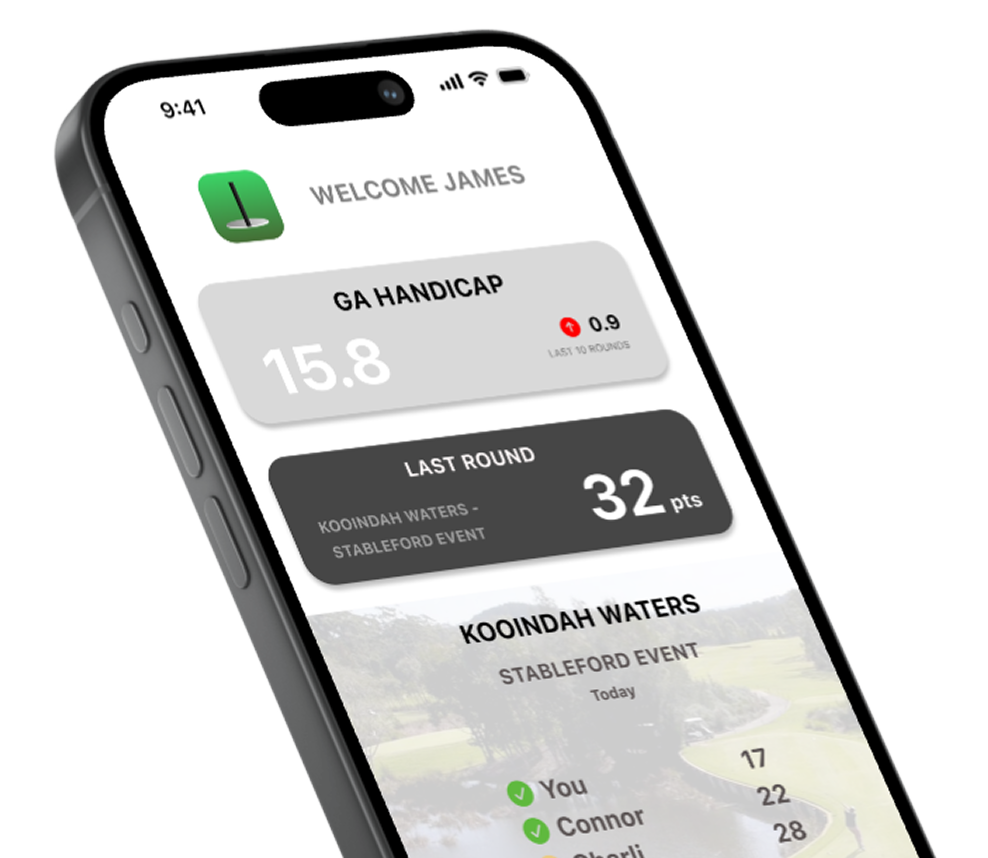
VoiceCaddy makes golf scoring effortless with voice-powered input and swipe confirmation, letting players focus on the game, not scorekeeping.
An iPhone app for scoring, validating, and submitting golf scorecards using voice.
VoiceCaddy makes golf scoring effortless with voice-powered input and swipe confirmation, letting players focus on the game, not scorekeeping.
The idea for this app was spurred on by a frustration using a fragmented set of solutions to score apps. When I played golf, I appreciated the simplicity of well designed golf apps, but was hamstrung by the necessity to use the club-issued and Australian Golf Handicap approved app. I wanted to create an app simple enough for competition golfers, with a slick interface.
How might we enable golfers to effortlessly track their scores without disrupting play?
According to the Golf Australia, more than 3.8 million people in Australia play golf annually. Golf is synonymous with innovation- players are constantly in pursuit of new ways to enjoy the game they love. In such a fragmented market of different solutions, I wanted to learn about how people felt about the core aspect of golf- scoring.
Analyzing some of the most popular golf scoring apps revealed that each tends to focus on specific, niche functionalities, with Arccos offering the most advanced shot-tracking and analytics. Most apps prioritize either GPS yardage, scorekeeping, or performance tracking, but few provide a seamless, hands-free scoring experience.
Interestingly, this gap was later echoed by participants during user interviews, highlighting a need for a more intuitive and integrated digital solution that enhances gameplay without disrupting it.
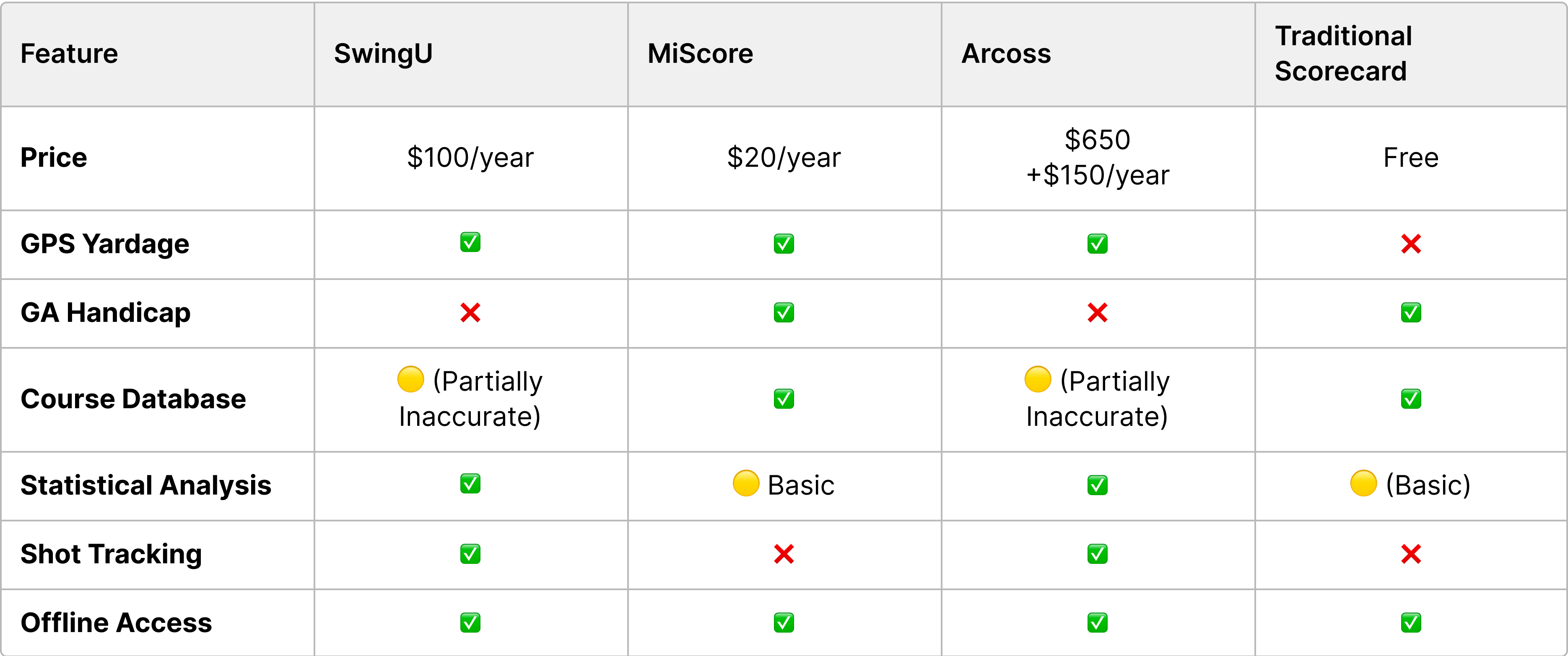
Comparing features between top scoring apps revealed an fractured feature set
“How do you go about scoring?” To understand this question, I followed several golf players around at a local golf course to study Processes and apps that golfers used to score throughout their round. The following were my learnings:
Golf is a game based on mutual respect and scoring is a process of recognising each other as equals.
Depending on your performance, the process of scoring can be elating or deflating. This emotion is the core of golf.
It’s great to have insight into your game to improve, but all that truly matters is the 18 scores you submit to the competition software
Submitting a score means winning or loosing, but golf is game where you compete against yourself. The real thrill is watching your handicap lower.
Golf apps are quick to suggest the winds direction, hole elevation, and suggested clubs. But competition golfers choose to rely on their intuition.
Using technology detracts from the “in the moment experience”, and distractions lead to lower performance. Existing apps are undelightful,
“I PLAY COMPETITIONS BECAUSE IT’S SOMETHING TO LOOK FORWARD TO DOING WITH MY MATES EACH WEEK. IT’S A SOCIAL THING. I DON’T REALLY MIND IF I WIN OR LOOSE, I JUST WANT TO HAVE SOME FUN OUT ON THE COURSE. SCORING IS A NECESSARY EVIL, AND
I CAN GET LAZY ABOUT FILLING IT IN.
Aaron
The competitive analysis and user interviews gave me a better understanding of who the users were and how they might use a reinvented app. I focused on expanding those findings into concrete visualisations that would help me empathise with users and define the product.
Based on patterns from my user insights I developed two personas - a young technologically inclined user that loves golf and playing with his mates and an older technophobe. Since the goal of the project was to make disruption free golf scoring more accessible to everyone, it was important for the features to be intuitive for all. As such, the technophobe was the primary persona I focused on for the rest of the project’s development.
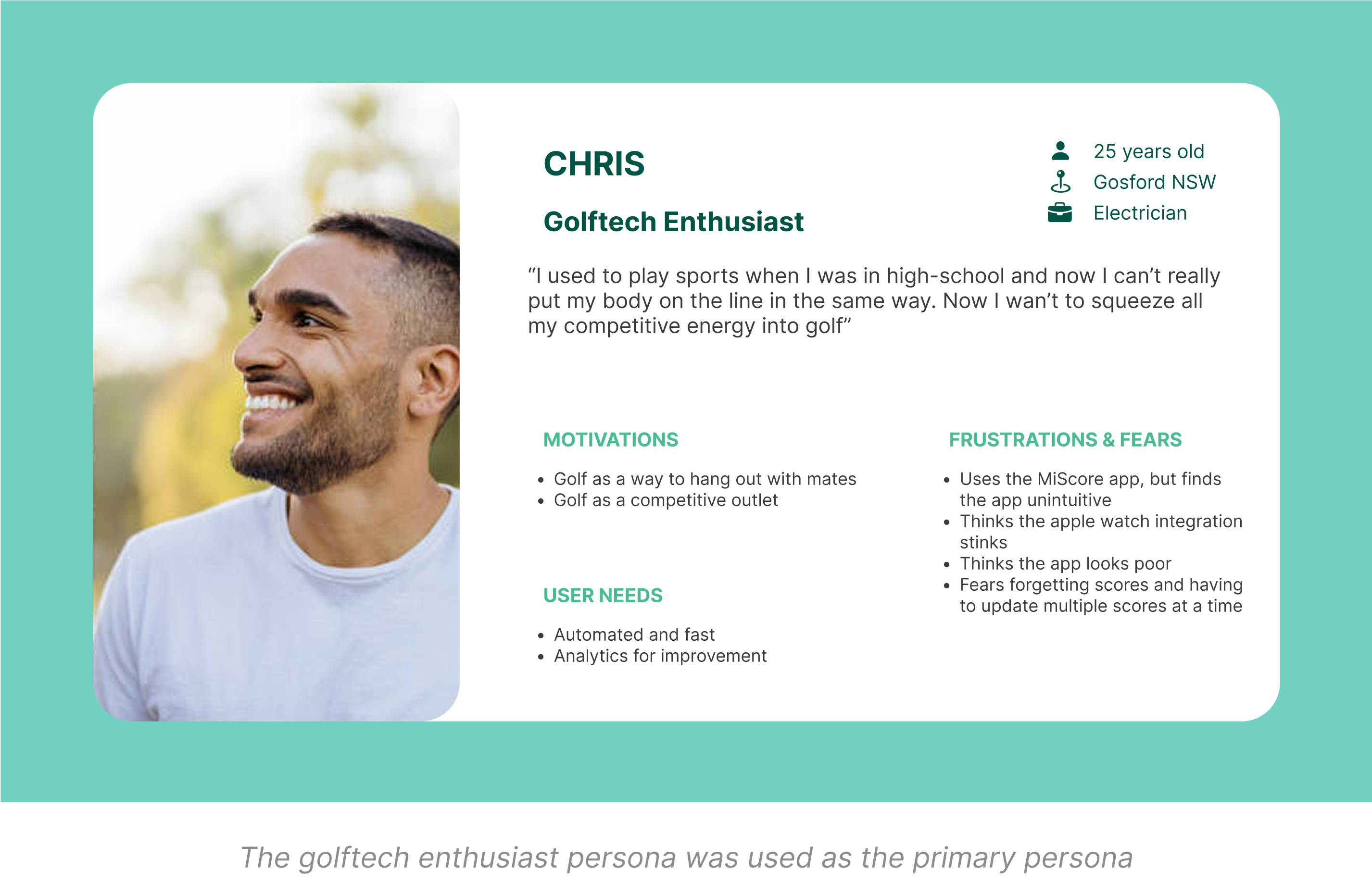
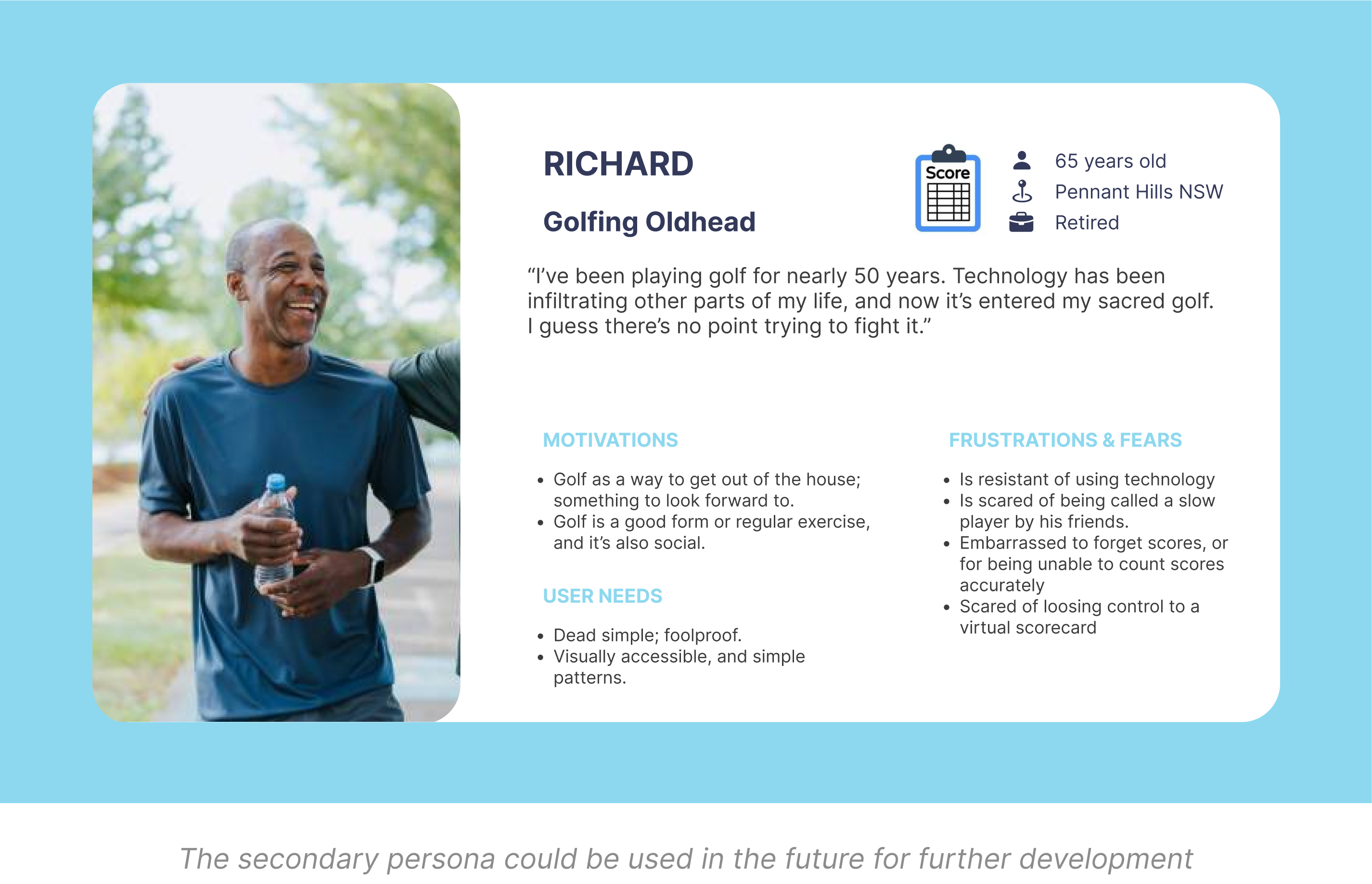
Based on our key persona, I developed I looked at the key problems that we could look to solve.
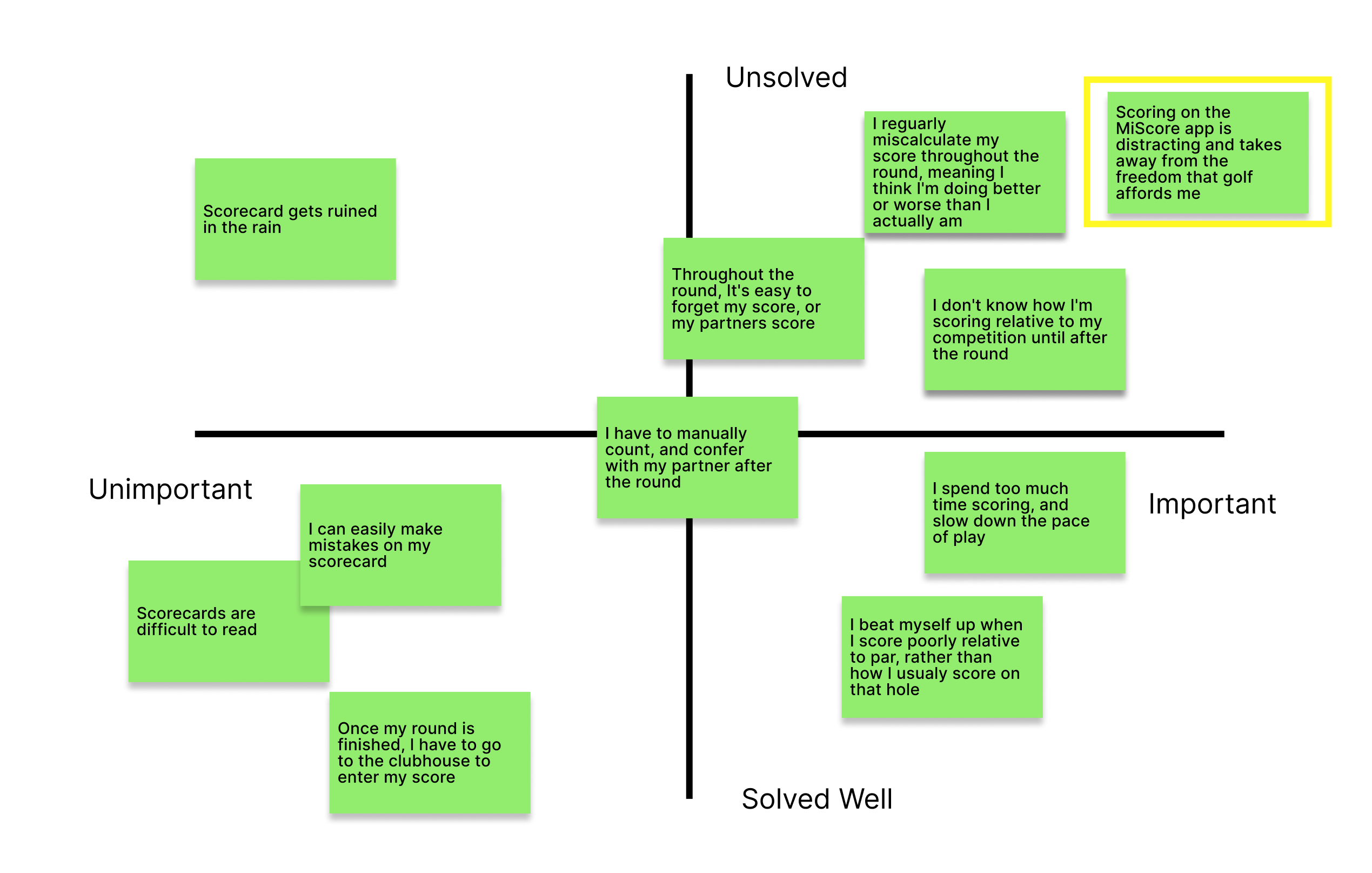
There are lots of problems that exist with scoriing - some more worth solving than others
I am: a competition golfer at my local course
I am trying to: enter my scores promptly into the competition system
But: It requires too much of me
Because: I have to remember my (and my groups) scores for long periods of time, entering them one by one into a phone or scorecard.
Which makes me feel: tired and distracted
In an ideal world: I just play my natural game; my score is something I don’t need to think about
The greatest benefit to me is: I can play golf uninterruptedly
Which makes me feel: satisfied, focused
How might we seamlessly and uninterruptedly score golf?
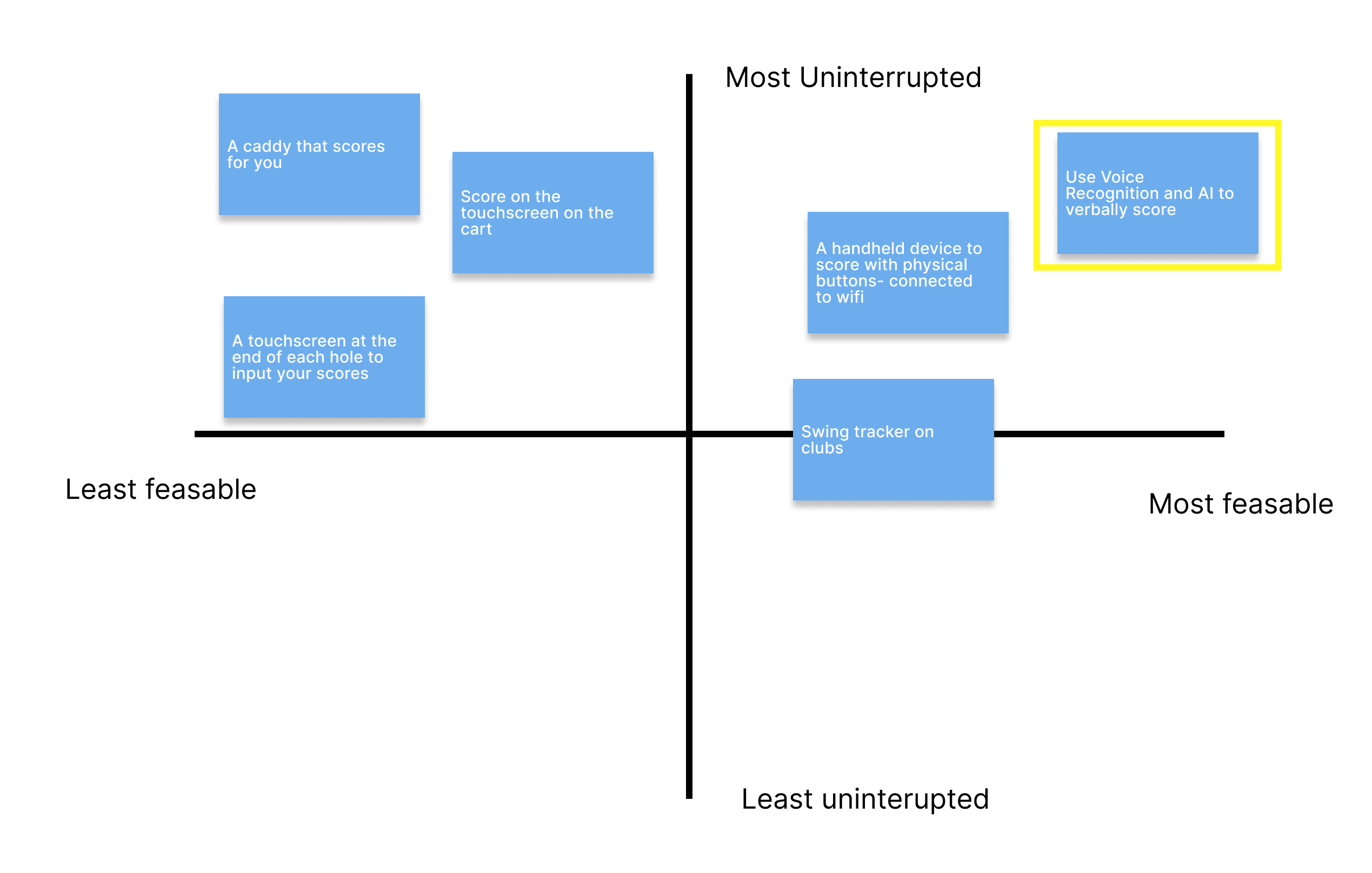
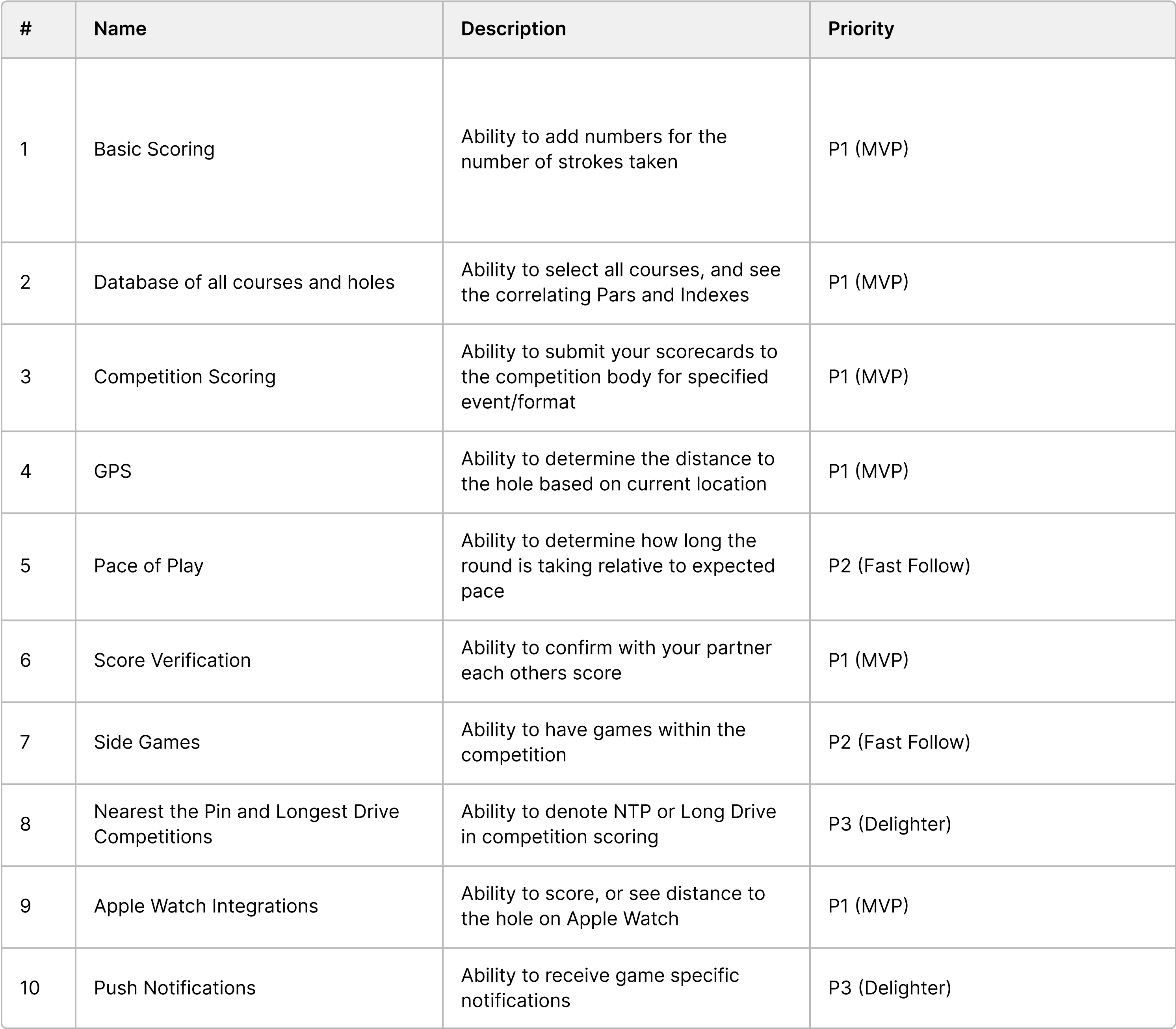
From the touch points and needs gleamed from the empathizing phase, I created a Product Feature Roadmap to outline specific app features and organize upcoming design efforts.
Golfers actually want voice-based scoring
Risk: If golfers don’t want to use voice input, the app is irrelevant.
Test: Create a simple prototype and test with real golfers.
Validation Criteria: If 80%+ of testers say they’d prefer voice scoring over manual entry.
Voice recognition will be accurate in a golf environment
Risk: If the voice recognition struggles with wind noise, accents, or golf course conditions, the app becomes frustrating.
Test: Build a basic MVP to test voice accuracy in different real-world golf environments.
Validation Criteria: Voice accuracy must be above 90% across different accents and environments.
Golfers will trust a digital score confirmation process
Risk: If players don’t trust an app for score validation (vs. traditional scoring), adoption will be low.
Test: Run a small tournament using only the app and interview players about trust & ease of use.
Validation Criteria: 85%+ of users feel comfortable relying on the app for scorekeeping.
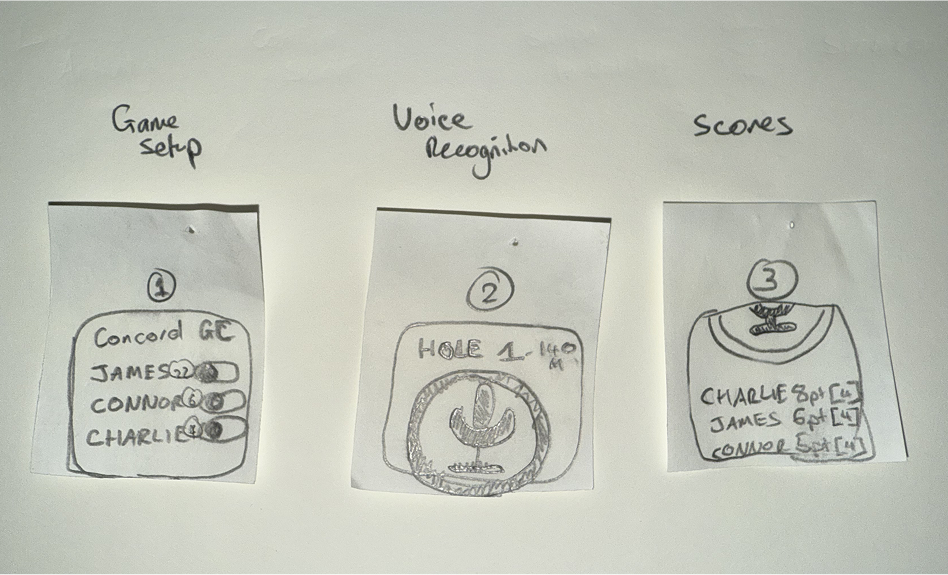
This part of the process required doing a bit of research into photo and audio technology to understand the basic limitations of what the app would be able to achieve. For example, I later built in a confirmation step in the Voice Recognition flow, based on methods to increase confidence in AI software.
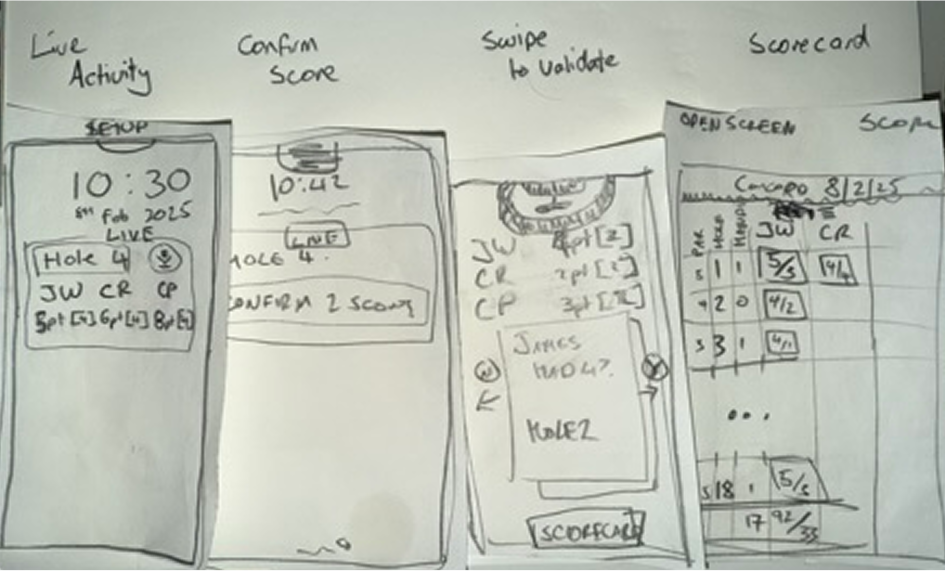
Scoring on the Apple Watch
Validation of the scores happens on the phone
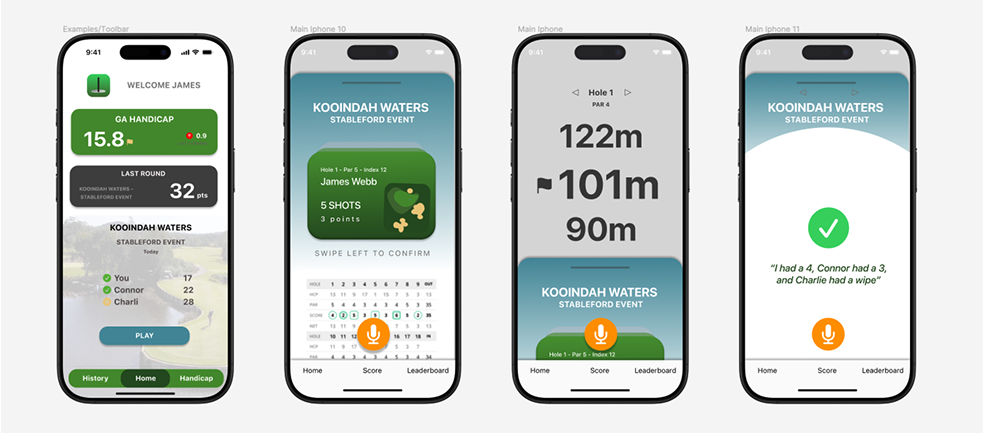
Based on the user insight that technology detracts from the meditative golf experience, the voice feature must be easily accessed with one hand and without much effort.
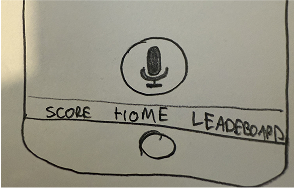
I decided that a primary button on the Apple Watch, Home Screen and Scoring page would serve as a point of access for all scoring needs. The ease of using voice would allow them to add scores regardless of what hole they were on, or what hold they needed to score.
VOICECADDY was picked as the app name for its practical and clear relation to assistance to ‘ease of use’. It was the focus of the app to ensure that the app would be accessible to all users. Considerations were made to ensure those that were unable to speak clearly would also experience delight using the app.
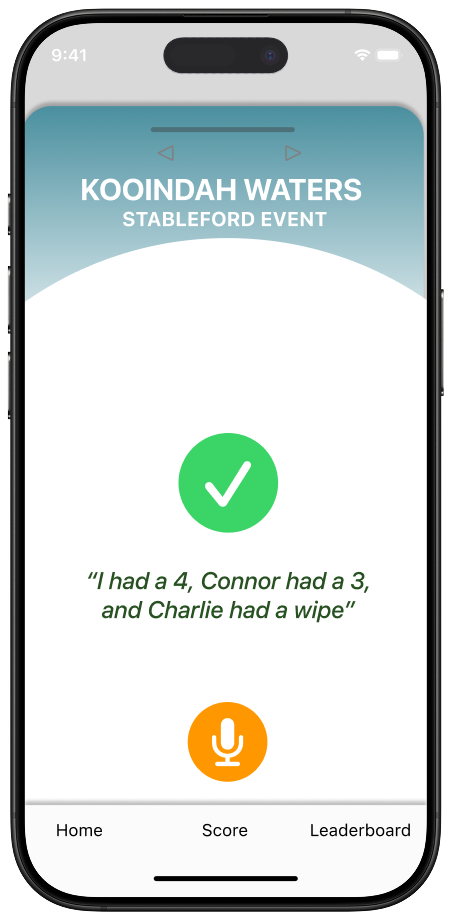
VoiceCaddy is designed around the ability to add scores using natural language. Like you would talk to your mates, or your caddy
The app does the process of scoring for you- no need for manually counting, scoring, or remembering. Players can update many holes all at once.
The process of validating scores at the end of a round is cumbersome, and prone to mistakes. With a redesigned process, players validate their scores (and their partners’ scores) as the round goes on.
With a simplified swipe to validate flow, users can -
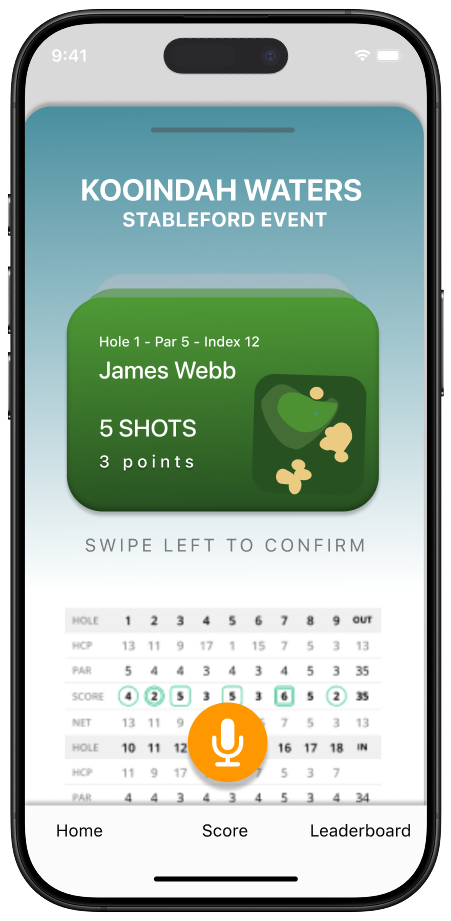

It’s expected that golf apps help players as much as possible, so I added some core GPS functionality to ensure that players could adopt this app readily.
The app design included design decisions that fundamentally upended the way that players think about adding scores to a mobile app. I conducted a round of usability testing on a high-fidelity prototype to identify usability issues in using these features.
In order to observe user micro-interactions, I took the app out onto the course to test it out. I got my friends to have a go of “using” the app too.
We learned quickly that we LOVED the ability to rely on AI to do the hard work for us. It was satisfying to not have to remember scores even for a moment walking back to the cart after the hole had finished.
We learned that it was important that the app be automated, but not to annoy the golfer, especially when the player is making a stroke.
We also wished for a way to accept more than one card at a time.

Usability testing revealed that the main issues were confusion over how to validate my partners’ score, lack of indicators such as showing which score had been validated by my partner, and need for more useful editing options. Based on the feedback, I applied the following revisions to my wireframes:
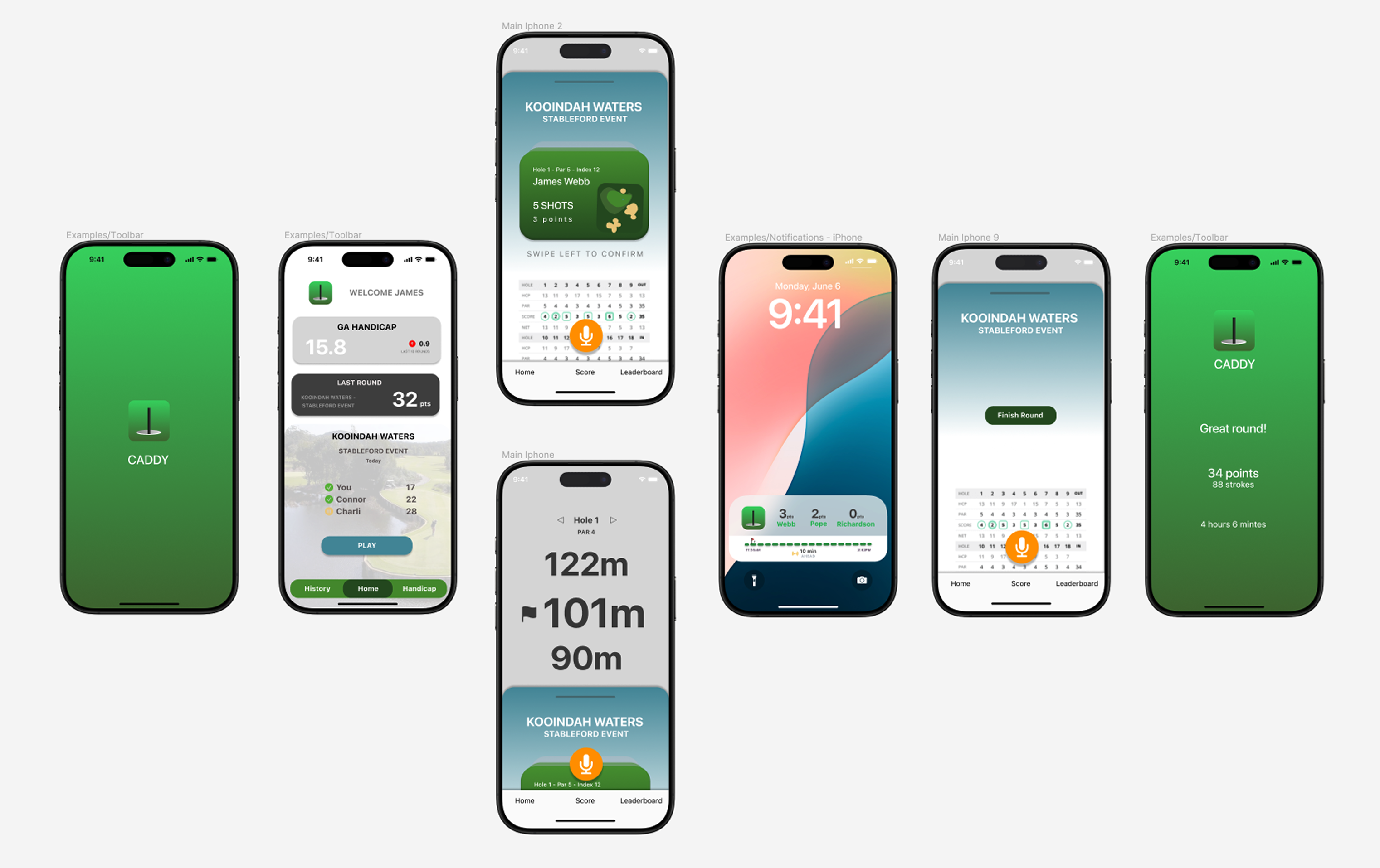
APP LOADING & EXPLORE FEATURE
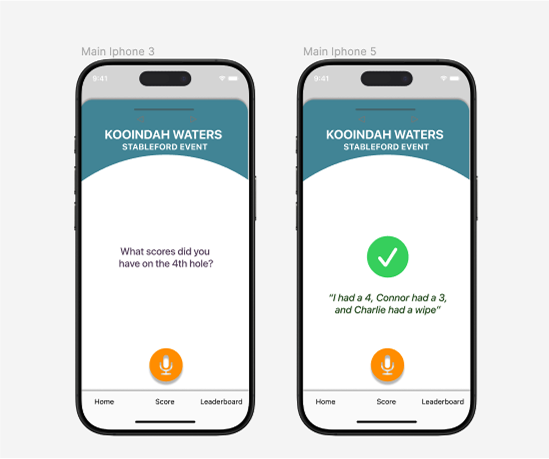
SPECIES IDENTIFICATION
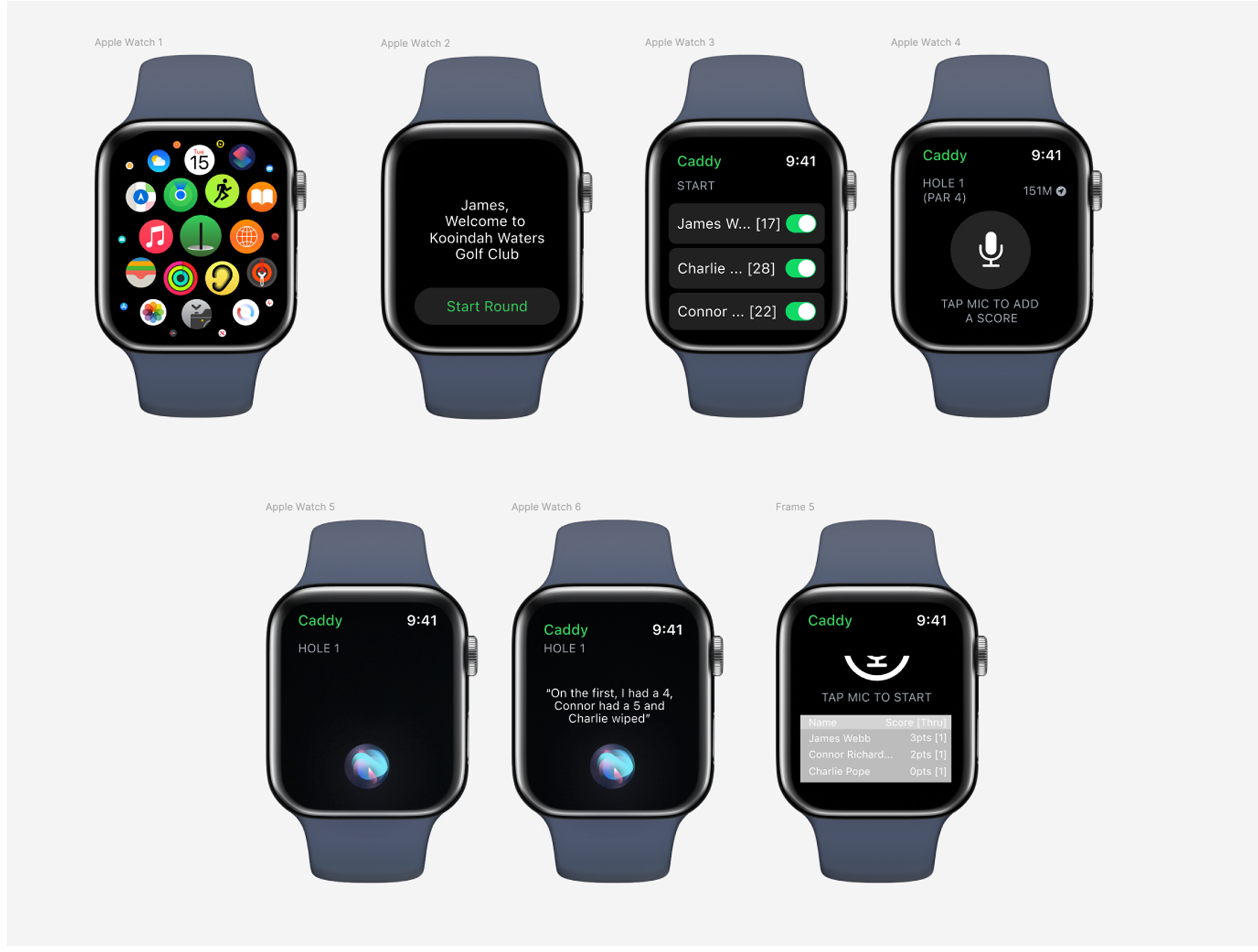
Following the first round of testing, the next steps would be to iterate and design for features beyond the MVP.
I knew going into this project that it would be a challenge. What features are most important? How would they work with technology limitations? Given the compliance problems that golf scoring faces, what are some ways an app solution can provide relief? I found myself truly enjoying the process of designing and strategising flows and user interactions.
Some key takeaways are:
While an app cannot solve all the needs of the golfing community, I believe that a good user experience can facilitate less negativity in bringing technology into golf. In a sport surrounded by high barriers to entry- making scoring more accessible to the masses opens new opportunities for the sport as a whole.
Interested in working together or looking to chat over coffee? Shoot me a message and let’s talk!


© James Webb